
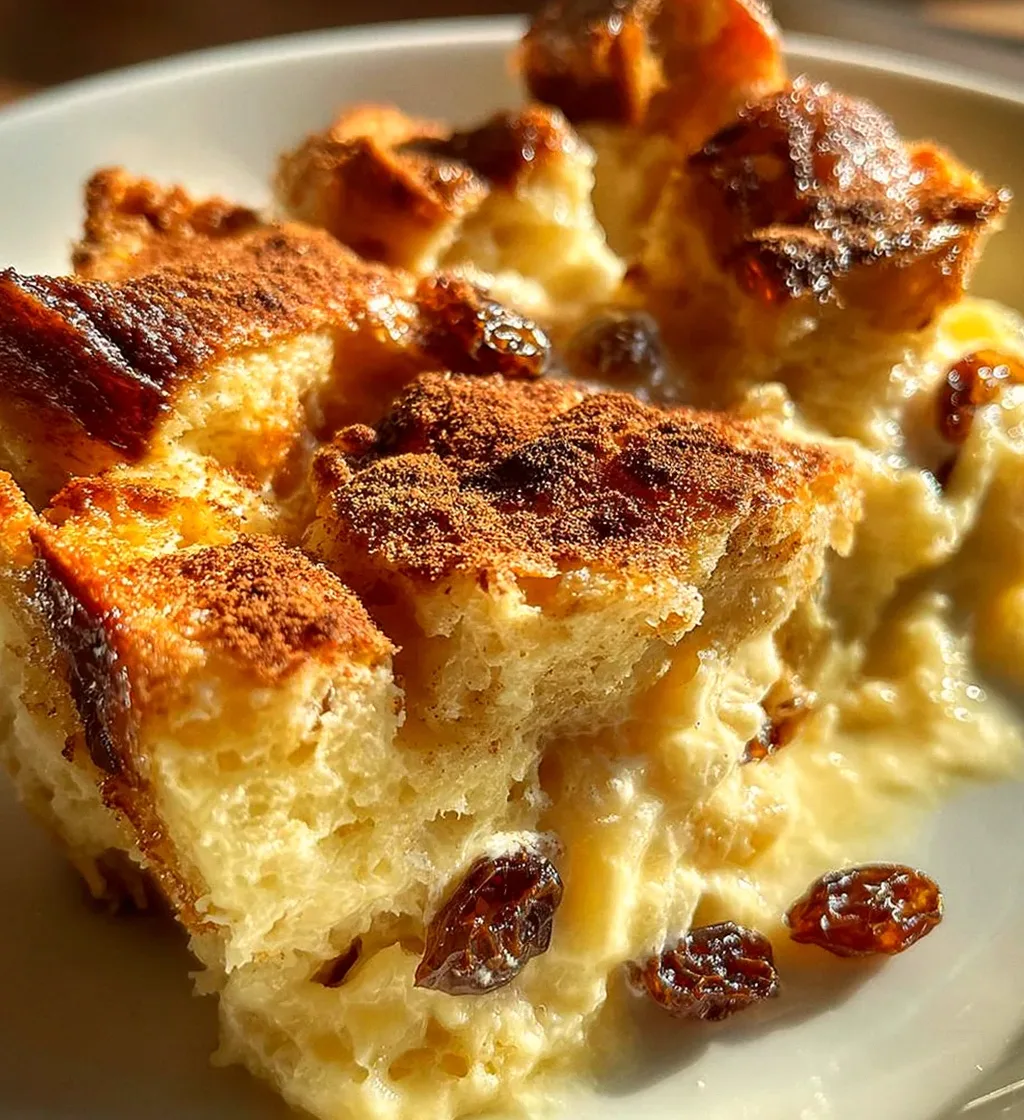
Croissant Bread Pudding | Baking Recipes
Treat yourself and your loved ones to this bakery-fresh Croissant Bread Pudding. Featuring wholesome pantry essentials and delicate sweetness, every bite is pure homemade decadence.
Recipe Timing
- Prep Time: 180 minutes
- Cook Time: 55 minutes
- Total Time: 3 hour 55 minutes
- Servings: 4 servings
- Difficulty: Intermediate
Key Takeaways
- Quick & Reliable: Ready in 3 hour 55 minutes with intermediate difficulty, yielding 4 servings.
- Texture Contrast: Highlights a tender bakery crumb and rich texture.
- Serving Perfection: Best served warm straight from the baking dish scooped into bowls with artisanal vanilla bean ice cream.
- Make-Ahead Friendly: Stores effortlessly in an airtight container for easy entertaining.
Nutritional Recipe
- Calories: 210 kcal
- Protein: 6g
- Carbohydrates: 52g
- Fat: 18g
- Dietary Fiber: 3g
- Sodium: 280mg
Why You’ll Love These Croissant Bread Pudding
Indulging in homemade confections and baked goods should be a deeply rewarding experience, and this Croissant Bread Pudding delivers on every culinary promise. From the very first bite, you will appreciate the delicate equilibrium between sweetness and texture—rich, velvety layers perfectly counterbalanced by tender crumb or shatteringly crisp accents. It captures the authentic charm of an artisan bakery right in your home kitchen.
What makes this recipe truly stand out is its approachable, foolproof method. You do not need specialized pastry school credentials or hard-to-find specialty tools to produce a showstopping dessert. By following straightforward techniques and relying on dependable visual cues, even novice bakers will achieve consistent, picture-perfect results every single time.
Whether you are preparing a sweet centerpiece for a celebratory gathering, sharing an afternoon treat with loved ones, or keeping a thoughtful homemade dessert on hand for weeknight cravings, this recipe never fails to impress. It is versatile, easy to scale for crowds, and guaranteed to earn enthusiastic requests for seconds.
Essential Ingredients & Deep Flavor Dynamics
Achieving exceptional bakery-style flavor and structure depends on how individual pantry elements interact under gentle heat:
- High-Grade Butter & Fats: Using quality butter provides crucial moisture and tender crumb while carrying rich fat-soluble flavor compounds evenly across the palate.
- Balanced Natural Sweeteners: Granulated and brown sugars not only impart clean sweetness but also retain moisture and promote golden, caramelized edges.
- Pure Vanilla & Flavor Accents: Pure vanilla extract, citrus zest, or warm aromatic spices round out the profile, transforming a simple dessert into an artisanal treat.
- Properly Measured Flour Matrix: Sifting or spoon-measuring flour prevents heavy, dense textures, yielding an airy, melt-in-your-mouth bite.
- Pinch of Fine Sea Salt: A subtle mineral accent that balances sweetness, awakens natural butter flavors, and prevents cloying richness.
The Complete Cooking Journey
The culinary experience begins the moment you set out your ingredients and preheat your kitchen workspace. Measuring out flour, sugars, and butter with precision creates a calming rhythm, while the initial scent of vanilla, toasted butter, or warm spices awakens anticipation.
As the mixture comes together and enters the heat or begins its gentle resting period, your kitchen fills with the unmistakable, comforting aroma of fresh home baking. Watching textures evolve—from batter into golden, puffed perfection with delicate crusts—is one of the most rewarding sensory milestones in cooking.
The final chapter is all about patience and presentation. Allowing your creation to cool completely ensures that internal steam settles and textures firm into neat, bakery-clean slices. Plating each portion and taking that first decadent bite brings the entire journey to a memorable close.
Ingredients:
- 1 cup fresh baking
- 1 cup fresh croissant
- 250 g de farine T45
- 10 g de levure de boulanger fraiche
- 30 g de sucre
- 5 g de sel
- 100 ml de lait
- 1 cup œuf + 1 jaune pour la dorure
- 50 g de beurre doux
Method:
Step 1: Cook to Peak Tenderness
Placez la levure dans un petit bol, ajoutez un cuillère à soupe d’eau tiède et laissez reposer 10 minutes. Versez la farine dans un grand saladier et faites un puits dans lequel vous mettez la levure. Ajoutez le sucre et le sel en veillant à ce qu’il ne touche pas directement la levure. Ajoutez ensuite progressivement le lait tiède (sans en mettre la totalité) et les œufs. Pétrissez de manière à obtenir une pâte souple et homogène. Si nécessaire ajoutez encore un peu du lait que vous avez conservé. Formez une boule et laissez-la reposer 1 heure à température ambiante ou proche d’un radiateur, en hiver. La pâte doit doubler de volume. Malaxez-la ensuite rapidement pour la faire retomber puis placez-la au réfrigérateur pendant 30 minutes. Sortez le beurre du réfrigérateur et laissez-le à température ambiante. Étalez la pâte sur un plan de travail fariné à l’aide d’un rouleau à pâtisserie. Le beurre doit avoir à peu près la même consistance que la pâte. Déposez-le au centre de la pâte en l’étalant, sans en mettre jusqu’aux bords. Enveloppez le beurre dans la pâte et soudez bien les bords. Au besoin vous pouvez légèrement humidifier la pâte avec les doigts. Pour le feuilletage, allongez la pâte avec un rouleau en faisant attention de ne pas laisser échapper le beurre. Formez un grand rectangle assez long pour que l’on puisse replier en 3 : rabattre les 2 extrémités vers le centre, puis replier en 2. Tournez la pâte pour avoir la pliure à droite et allongez de nouveau la pâte pour former un grand rectangle et recommencez l’opération encore une fois. Laissez reposer 30 minutes au réfrigérateur pour raffermir car le beurre a tendance à vite se réchauffer. Étalez de nouveau votre pâte en un grand rectangle et à l’aide d’un couteau propre et bien aiguisé, formez des triangles de 20 x 10 centimètres environ. Roulez délicatement chaque triangle en finissant par la pointe. Déposez les croissants sur une plaque à four recouverte de papier sulfurisé en veillant à les espacer un peu. Laissez-les gonfler environ 1 heure avant de les dorer avec du jaune d’œuf dilué dans un peu de lait. Préchauffez votre four à 210° et enfournez pendant 10 à 15 minutes en surveillant bien la coloration.
Step 2: Bake to Perfection
Transfer the loaf pan to the preheated oven and bake at 350°F (175°C) for 50-60 minutes until deeply golden brown and a skewer inserted into the center emerges clean with a few moist crumbs.
Step 3: Rest and Scoop into Bowls
Allow the crumble to rest for 10-15 minutes so the bubbling juices settle, then use a large serving spoon to scoop warm, generous portions into bowls and top with a scoop of vanilla ice cream.
If you love this recipe, you must check out our reader-tested Overnight Chia Pudding | Baking Recipes!
Serving Suggestions & Pairings
Serve slightly warm or at room temperature alongside a generous scoop of artisanal vanilla bean ice cream, a dollop of fresh whipped cream, or a steaming cup of freshly brewed dark roast coffee.
Storage & Make-Ahead Tips
- Room Temperature & Refrigerator Storage: Keep completely cooled leftovers in an airtight container in the refrigerator for up to 4-5 days, or refrigerate for up to 5-6 days to extend freshness. Adding a sheet of wax paper between slices prevents sticking.
- Freezing Protocol: Wrap cooled portions individually in plastic wrap followed by a layer of heavy-duty aluminum foil. Label with the date and freeze for up to 3 months. Thaw overnight in the refrigerator or on the counter at room temperature.
- Reheating & Refreshing: To restore that freshly baked warmth, warm individual servings in a 300°F (150°C) oven or toaster oven for 5 to 7 minutes. Avoid high-heat microwaving, which can make delicate pastries rubbery.
Kitchen Wisdom & Success Tips
- Room Temperature Ingredients: Bringing dairy and eggs to room temperature creates smooth, cohesive batters that rise evenly.
- Accurate Flour Measuring: Spoon flour into measuring cups and level with a knife to avoid dense, heavy baked goods.
- Cool Before Slicing: Let pastries cool completely so internal steam redistributes and textures set cleanly.
- Cold Butter for Crisp Streusel: Use chilled cubed butter straight from the refrigerator and work into the oats and flour until pea-sized clusters form, guaranteeing a shatteringly crisp, buttery topping.
- Fruit Thickening: Toss the fruit with cornstarch and a squeeze of fresh lemon juice so the bubbling juices thicken into a luscious, saucy glaze without turning watery.
- Rest Before Scooping: Allow the crumble to rest for 10-15 minutes after baking so the bubbling caramel juices settle before scooping warm into bowls.
Flavor Variations & Adaptations
- Berry & Fruit Swirl: Fold in fresh raspberries, wild blueberries, or sliced bananas for juicy bursts of natural sweetness.
- Warm Spice Accent: Add a pinch of cinnamon, freshly grated nutmeg, or pure vanilla bean paste for bakery-fresh warmth.
Frequently Asked Questions
Q: Can I make this dessert ahead of time for an event?
A: Absolutely! Baking or assembling this recipe 24 hours in advance allows flavors to meld and textures to settle, making it even easier to slice and present cleanly to guests.
Q: How do I prevent my baked goods from turning out dry or dense?
A: The most common culprit is over-measuring flour. Always fluff your flour with a fork, spoon it gently into your measuring cup, and sweep off the excess with a flat edge without packing it down.
Q: Can I freeze this recipe after baking?
A: Yes, wrap cooled portions tightly in plastic wrap and foil. Freeze for up to 3 months, and thaw overnight in the refrigerator for bakery-fresh flavor.
Q: Can I substitute dairy milk with plant-based alternatives?
A: In most baking recipes, unsweetened almond milk, oat milk, or soy milk substitute seamlessly at a 1:1 ratio without altering crumb structure.
Q: What is the best way to test for doneness?
A: Look for visual cues such as golden-brown edges, a gentle bounce when lightly touched in the center, or a toothpick inserted in the thickest part coming out clean with a few moist crumbs.
📌 Chef’s Recommendation: For another crowd-pleaser, bookmark our Tiramisu Chia Pudding | Baking Recipes.
Wrapping Up
Bake up this irresistible Croissant Bread Pudding today and treat your loved ones to pure bakery-fresh decadence!

Croissant Bread Pudding | Baking Recipes
This easy homemade Croissant Bread Pudding is packed with authentic flavor and foolproof technique. Save this delicious recipe for your next cooking day!
- Prep Time: 3 hrs
- Cook Time: 15 mins
- Total Time: 3 hr 15 mins
- Yield: 4 servings 1x
Ingredients
1 cup fresh baking
1 cup fresh croissant
250 g de farine T45
10 g de levure de boulanger fraiche
30 g de sucre
5 g de sel
100 ml de lait
1 cup œuf + 1 jaune pour la dorure
50 g de beurre doux
Instructions
Step 1: Cook to Peak Tenderness Placez la levure dans un petit bol, ajoutez un cuillère à soupe d’eau tiède et laissez reposer 10 minutes. Versez la farine dans un grand saladier et faites un puits dans lequel vous mettez la levure. Ajoutez le sucre et le sel en veillant à ce qu’il ne touche pas directement la levure. Ajoutez ensuite progressivement le lait tiède (sans en mettre la totalité) et les œufs. Pétrissez de manière à obtenir une pâte souple et homogène. Si nécessaire ajoutez encore un peu du lait que vous avez conservé. Formez une boule et laissez-la reposer 1 heure à température ambiante ou proche d’un radiateur, en hiver. La pâte doit doubler de volume. Malaxez-la ensuite rapidement pour la faire retomber puis placez-la au réfrigérateur pendant 30 minutes. Sortez le beurre du réfrigérateur et laissez-le à température ambiante. Étalez la pâte sur un plan de travail fariné à l’aide d’un rouleau à pâtisserie. Le beurre doit avoir à peu près la même consistance que la pâte. Déposez-le au centre de la pâte en l’étalant, sans en mettre jusqu’aux bords. Enveloppez le beurre dans la pâte et soudez bien les bords. Au besoin vous pouvez légèrement humidifier la pâte avec les doigts. Pour le feuilletage, allongez la pâte avec un rouleau en faisant attention de ne pas laisser échapper le beurre. Formez un grand rectangle assez long pour que l’on puisse replier en 3 : rabattre les 2 extrémités vers le centre, puis replier en 2. Tournez la pâte pour avoir la pliure à droite et allongez de nouveau la pâte pour former un grand rectangle et recommencez l’opération encore une fois. Laissez reposer 30 minutes au réfrigérateur pour raffermir car le beurre a tendance à vite se réchauffer. Étalez de nouveau votre pâte en un grand rectangle et à l’aide d’un couteau propre et bien aiguisé, formez des triangles de 20 x 10 centimètres environ. Roulez délicatement chaque triangle en finissant par la pointe. Déposez les croissants sur une plaque à four recouverte de papier sulfurisé en veillant à les espacer un peu. Laissez-les gonfler environ 1 heure avant de les dorer avec du jaune d’œuf dilué dans un peu de lait. Préchauffez votre four à 210° et enfournez pendant 10 à 15 minutes en surveillant bien la coloration.
Step 2: Bake to Perfection Transfer the loaf pan to the preheated oven and bake at 350°F (175°C) for 50-60 minutes until deeply golden brown and a skewer inserted into the center emerges clean with a few moist crumbs.
Step 3: Rest and Scoop into Bowls Allow the crumble to rest for 10-15 minutes so the bubbling juices settle, then use a large serving spoon to scoop warm, generous portions into bowls and top with a scoop of vanilla ice cream.
Nutrition
- Calories: 210 kcal
- Sodium: 280mg
- Fat: 18g
- Fiber: 3g
- Protein: 6g